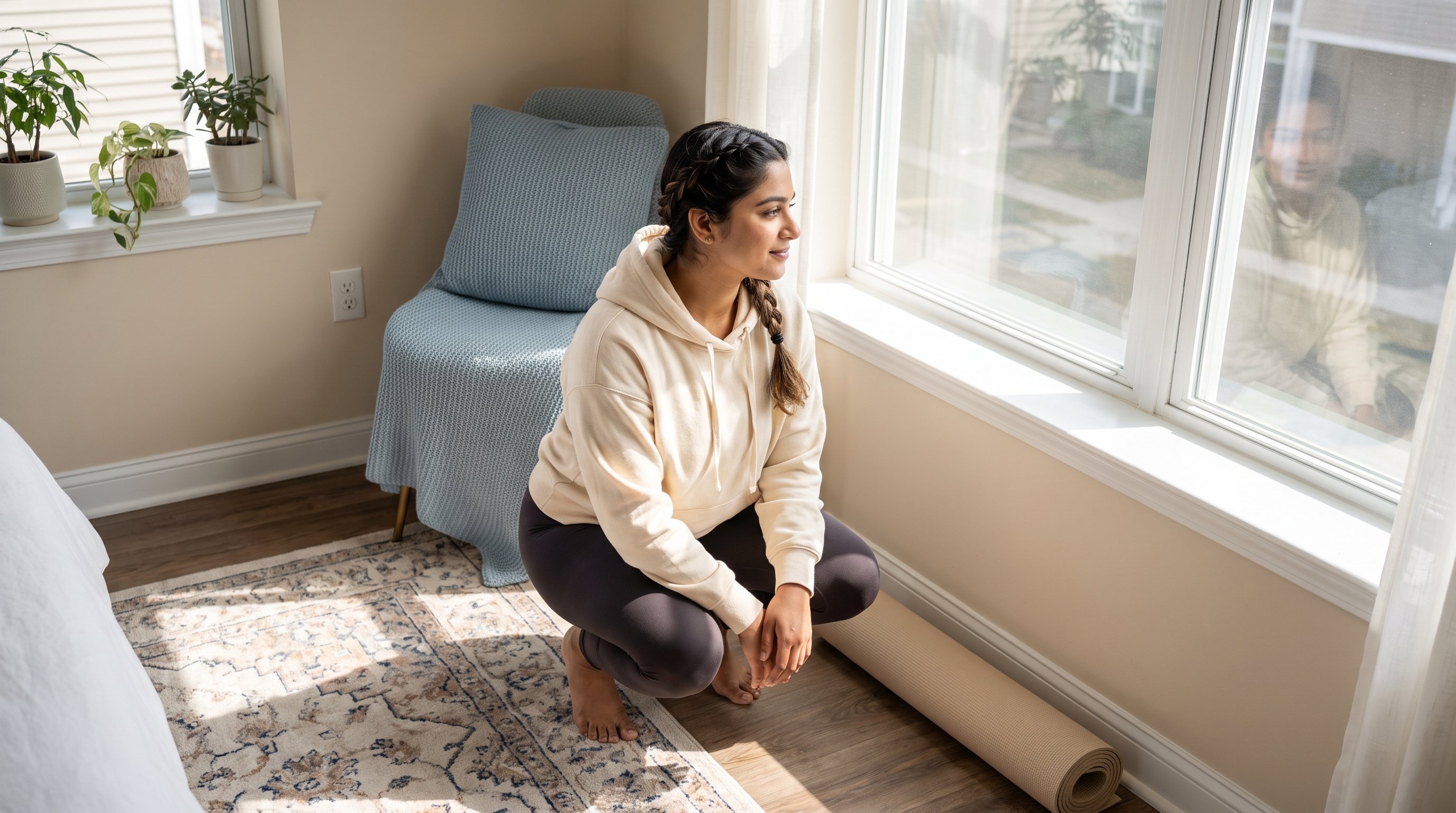
Morning Stretches: The Honest Guide To Starting Your Day Right
By:Author:Air Diet Editorial
Updated on:October 20, 2026

- Do Morning Stretches Actually Loosen You Up?
- Stretching Versus a Full Workout Session
- Why a Short Routine Beats an Ambitious One
- Adapting Stretches to Where You're Starting From
- Fitting Stretches Around a Real Breakfast
- No, Stretching Your Stomach Won't Flatten It
- Building Stretches Into an Air Diet Routine
- Starting Tomorrow Morning Without Overcomplicating It
Morning stretches loosen stiff muscles and joints after hours of lying still, and a short routine can leave you moving easier within minutes. The mechanism is simple: movement increases blood flow to tissue that has been static all night, and gentle range-of-motion work reminds your joints what they're capable of.
None of this changes your weight or burns off anything specific. What it does is make the rest of the day's movement feel less effortful, which matters more than it sounds.
This guide covers whether stretching actually does anything, how it stacks up against a full workout, who should adapt the routine and how, and where it fits alongside the rest of a normal day.
Do Morning Stretches Actually Loosen You Up?
Yes, in the way that matters most: stretching increases the range a joint can move through right now, and that effect is noticeable within a single session.
The arithmetic is plain. Five minutes of stretching, done daily, adds up to about 35 minutes a week and roughly 150 minutes a month of consistent joint and muscle movement - not nothing, even if each session feels too short to matter on its own.
What It Does Not Do
Stretching a tight hip or shoulder doesn't reduce fat in that spot, because the body doesn't choose where it draws energy from based on which muscle just moved. Flexibility and fat loss are two separate processes, and stretching only addresses the first one.
What stretching reliably delivers is a lower barrier to moving more later - stiff mornings make people skip walks, skip stairs, skip the small movement that adds up over a day.
Stretching Versus a Full Workout Session
The real decision most people face isn't stretching versus nothing - it's a five-minute stretch routine versus a longer workout they keep putting off.
Both have a place, but they solve different problems, and comparing them side by side makes the trade-offs obvious.

| Factor | Stretch Routine | Full Workout |
|---|---|---|
| Time needed | 5 to 10 minutes | 30 to 60 minutes |
| Equipment | None | Often none, sometimes weights |
| Energy required | Low | Moderate to high |
| Best done | Right after waking | Whenever energy allows |
| Main benefit | Looser joints, easier start | Strength and cardio gains |
Neither one cancels the need for the other. A stretch routine doesn't replace strength work or walking, but it does lower the activation energy needed to start the day moving instead of stiff.
Why a Short Routine Beats an Ambitious One
A five-minute stretch you actually do every morning beats a twenty-minute mobility routine you plan to do and skip three days out of five.
The maths is unforgiving here. Five minutes daily for a month is around 150 minutes total, while twenty minutes done twice a week over the same month is only about 160 minutes - roughly the same total time, but one version happened and the other one mostly didn't.
Consistency is unglamorous and it wins anyway. The honest version of a routine is short enough that skipping it feels harder than doing it.
Adapting Stretches to Where You're Starting From
If You're Just Starting Out
Keep it to two or three stretches - neck rolls, a forward fold, a gentle backbend - held for twenty to thirty seconds each. There's no need to chase a full routine before the habit itself is built.

If Mornings Are Already Rushed
Do the stretches while the kettle boils or the shower warms up - standing quad stretch, side bends, shoulder rolls all take seconds and need no mat.
If You're Older or Dealing With Stiff Joints
Move slower into each position and skip anything that produces sharp pain rather than mild tension. A gentle seated stretch, done daily, tends to help more than an occasional deep one.
If You Already Train Most Days
Use stretching as a separate, lighter practice rather than a warm-up substitute - your actual training session still needs its own specific warm-up before load.
Fitting Stretches Around a Real Breakfast
Stretching works best stacked onto something you already do, rather than treated as a separate appointment you have to remember.
Pairing it with breakfast prep is one of the simplest anchors - stretch for five minutes while something is on the stove, then sit down to eat.
This is also where a customized meal plan built around food you already like helps the rest of the morning hold together, because a breakfast you don't have to think hard about leaves more room for the stretch itself. Air Diet keeps that meal planning, along with step counts and water intake, in one place, so the routine isn't held up by decision-making before 8am.
No, Stretching Your Stomach Won't Flatten It
This is the promise a lot of people are quietly hoping for, and it's worth saying plainly: no stretch, routine or sequence targets fat on the stomach, thighs or anywhere else.
The body draws on fat stores based on overall energy balance, not on which muscle group just got stretched or worked - spot reduction isn't how the system is built.
The real benefit of a routine is narrower and still worthwhile: looser joints, an easier start to the day, and one less reason to skip the walk or workout planned for later.
Building Stretches Into an Air Diet Routine
A stretch works best as one piece of a wider routine rather than a standalone fix, and that's where having everything in one app saves the back-and-forth.
Air Diet brings together over 100 workouts and exercises, including light stretching and mobility sessions, alongside step, water and weight tracking, so the stretch you do at 7am connects to the walk you take at lunch and the dinner you've already planned.
The nutrition guides inside the app cover how movement, food and rest fit together, written to support the kind of small, steady changes that actually hold up over weeks rather than days.

Get Your Diet Plan
Eat Smarter Every Day
Starting Tomorrow Morning Without Overcomplicating It
Pick three stretches, give each one thirty seconds, and do them before checking a phone or starting the kettle - that's the whole routine for week one.
Add a stretch or extend a hold only once the first three feel automatic, and let the app handle the rest of the day's planning so the morning habit isn't competing with ten other decisions.
FAQ
Not directly - stretching doesn't burn a meaningful amount of energy or change where fat is stored. What it can do is make movement feel easier through the rest of the day, which supports the walking and activity that actually drives a deficit.
Five minutes daily adds up to around 150 minutes a month, which is a real amount of consistent movement even though each session feels brief. A short routine done daily beats a long one done occasionally, purely on the arithmetic of how often it actually happens.
Stack the stretches onto something already happening, like the kettle boiling or the shower warming up, so there's no extra block of time to find. Two or three stretches take under a minute each and don't need a mat, a room change or any equipment.
Air Diet includes light stretching and mobility sessions among its workouts, plus tracking for steps, water and weight, so a routine isn't an isolated habit sitting apart from everything else. It sits alongside the meal plan and activity tracking in one place, which makes the whole morning easier to hold together.
Share this post